A box room is a small room in a house that falls below the minimum floor area required to be legally classified as a bedroom. In UK housing law, a room must be at least 6.51 square metres (70 square feet) to count as a single bedroom. If it is even slightly smaller than that — even by one inch — it is not a bedroom. It is a box room.
This distinction matters enormously for social housing tenants. Whether a room counts as a bedroom affects your housing benefit, whether you are hit by the bedroom tax, whether your landlord can refuse a mutual exchange based on bedroom eligibility, and whether your property is officially classified as a 2-bed or a 3-bed.
The key law
Section 326 of the Housing Act 1985 sets out the statutory overcrowding standard, which defines minimum room sizes for sleeping accommodation. These sizes determine whether a room can legally be counted as a bedroom.
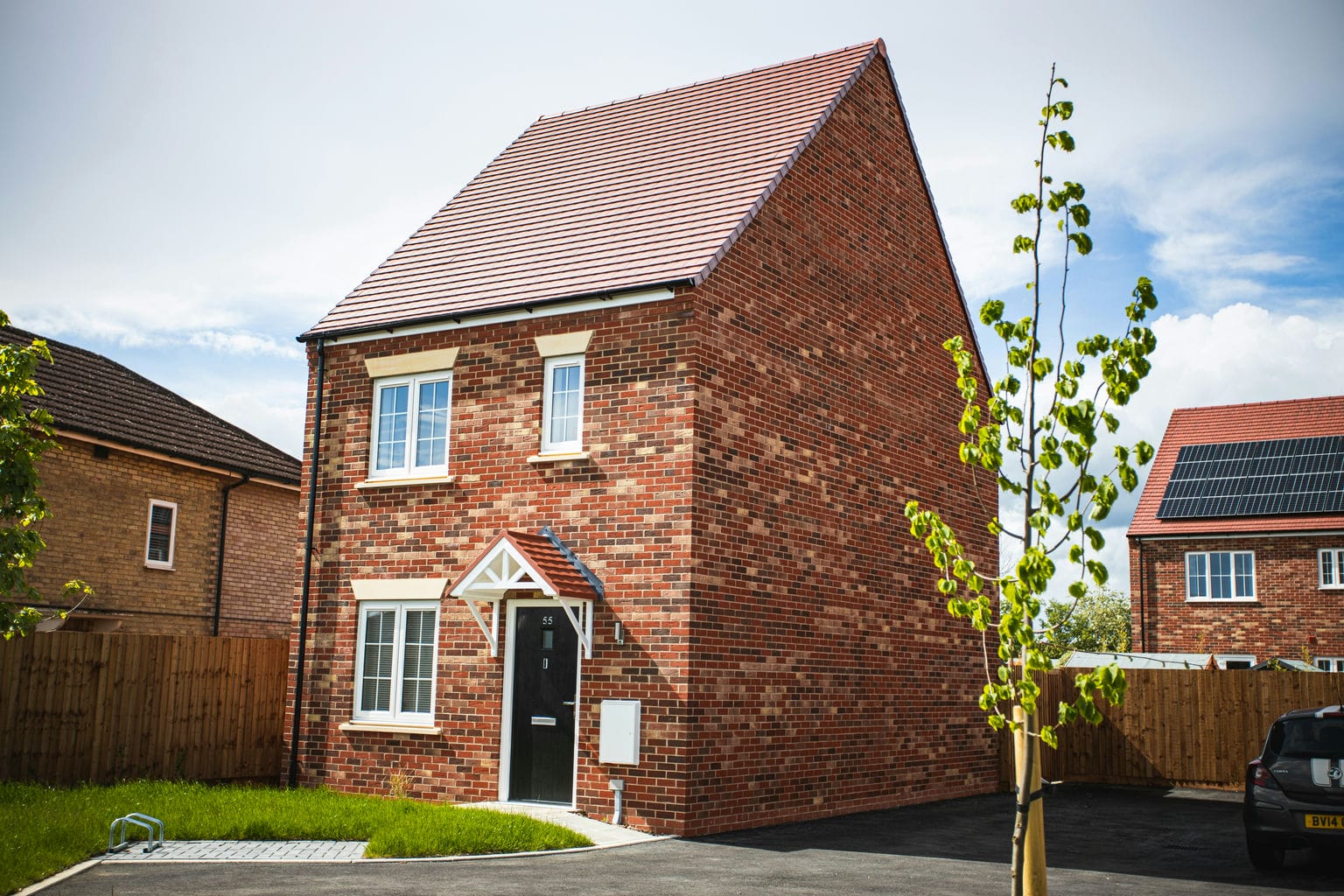
UK Minimum Bedroom Sizes
The minimum bedroom sizes in the UK come from the Housing Act 1985, Section 326 and the statutory overcrowding standard. These are not guidelines — they are legal minimums.
Single Bedroom
6.51 m²
(70 sq ft)
Minimum for 1 person
Double Bedroom
10.22 m²
(110 sq ft)
Minimum for 2 people
Below the minimum?
Any room with a floor area below 4.64 square metres (50 sq ft) cannot be counted as sleeping accommodation for anyone at all — not even a child. A room between 4.64 and 6.51 sq metres can only count as sleeping accommodation for one child under 10 years old, and cannot be counted as a bedroom for benefit or occupancy purposes. See our guide on when a child needs their own bedroom for the age rules.
How Is a Bedroom Measured?
The measurement is based on usable floor area, not total floor area. This is an important distinction because certain features of the room are excluded from the calculation.
Built-in wardrobes and cupboards — the area they occupy is excluded from the usable floor area
Chimney breast — the protruding area of a chimney breast is excluded
Areas under 1.5m ceiling height — in attic or loft rooms, any area where the ceiling is below 1.5 metres does not count
Door swing area — in some assessments, the area the door needs to open into is also excluded
This means a room that appears to be 7 square metres on paper could easily fall below the 6.51 threshold once you subtract a chimney breast or a built-in wardrobe. Many tenants discover their "third bedroom" is actually a box room once these exclusions are applied. This also affects bedroom tax calculations — if a room doesn't count as a bedroom, you shouldn't be charged for it.
Box Room vs Bedroom: Where Is the Line?
The line between a box room and a bedroom is brutally precise. There is no grey area in the law.
6.50 m²
Box room
Not a bedroom. Cannot be counted.
6.51 m²
Single bedroom
Meets the legal minimum.
Yes, one inch can make the difference. We have spoken to tenants who had a room that measured 6.50 square metres — one centimetre short of the minimum. That single centimetre meant the difference between a 2-bed and a 3-bed classification, which in turn affected their housing benefit by hundreds of pounds per year.
Why this matters so much
If your council has classified your property as a 3-bed when one of those rooms is actually a box room, you could be paying bedroom tax on a room that does not legally count as a bedroom. You could also be denied a mutual exchange because you are deemed to have "enough bedrooms" when you actually do not.
Box Rooms and the Bedroom Tax
The bedroom tax (officially called the spare room subsidy or removal of the spare room subsidy) reduces your housing benefit if you are deemed to have more bedrooms than you need. The deductions are significant:
1 spare bedroom
14%
reduction in housing benefit
2+ spare bedrooms
25%
reduction in housing benefit
If your council has counted a box room as a bedroom, you may be losing benefit unnecessarily. The good news is that you can challenge this. Several tribunal cases have ruled in favour of tenants who proved that a room did not meet the minimum size standard.
The key case is Nelson v Secretary of State for Work and Pensions (2014), where the Upper Tribunal held that room size must be considered when deciding if a room is a "bedroom" for housing benefit purposes. If a room is too small to reasonably be used as a bedroom, it should not be counted as one.
Box Rooms and Mutual Exchange
When you apply for a mutual exchange (home swap), your landlord assesses whether the swap would leave either household over-occupying or under-occupying. This assessment depends on how many bedrooms each property has. And that depends on whether a box room counts as a bedroom.
The problem is that different landlords sometimes classify the same size room differently. A "3-bed with box room" might be classified as:
Landlord A says: 3-bed
"We count all rooms that have ever been used as bedrooms, regardless of size."
Landlord B says: 2-bed
"The third room is 6.3 square metres. It does not meet the statutory minimum, so we class this as a 2-bed."
This inconsistency can block a swap that should be perfectly valid. If you are in this situation, ask both landlords to measure the room using the statutory overcrowding standard and cite Section 326 of the Housing Act 1985. The law is clear, even if landlord policies sometimes are not.
How to Measure Your Room
You do not need a surveyor to get a rough measurement. Here is how to do it yourself:
Use a tape measure and measure in metres for accuracy. Measure the length and width of the room at the widest usable points.
Multiply length × width to get the floor area in square metres. For example, 2.8m × 2.4m = 6.72 m² (that would be a bedroom).
Subtract any excluded areas — built-in wardrobes, chimney breast, areas with ceiling height below 1.5m.
Compare to the threshold: if the usable floor area is 6.51 m² or above, it is a single bedroom. If it is below 6.51 m², it is a box room.
Use our free bedroom calculator
Not sure how many bedrooms your household needs? Our free tool tells you exactly what the bedroom standard says for your family size.
Try the Bedroom CalculatorWhat If Your Council Got It Wrong?
If you believe your council or housing association has incorrectly classified a box room as a bedroom — and this is affecting your housing benefit or your ability to swap — you can challenge it. Here is how:
Measure the room yourself using the method above and record the measurements with photos.
Write to your landlord requesting a formal reassessment of the bedroom classification, citing Section 326 of the Housing Act 1985 and the statutory overcrowding standard.
Request a Discretionary Housing Payment (DHP) from your council while the reassessment is ongoing, if the bedroom tax is causing hardship.
Appeal to a First-tier Tribunal if your mandatory reconsideration is unsuccessful. You can do this yourself — you do not need a solicitor.
Contact Shelter for free advice and support with your challenge. They have significant experience with bedroom tax cases.
Box Rooms and Children
The rules around children and room sizes are particularly important for families in social housing. The statutory overcrowding standard has specific provisions:
Children under 1
A child under 1 year old is not counted at all for the purposes of the overcrowding standard. They do not need their own room or sleeping space.
Children aged 1 to 9
A child aged 1-9 counts as half a person for the room standard. Two children under 10 can share a room regardless of gender. A room between 4.64 and 6.51 m² can count as sleeping accommodation for one child under 10.
Children aged 10 and over
A child aged 10 or over counts as a full person. A box room (under 6.51 m²) cannot be counted as a bedroom for a child aged 10 or over. They need a room that meets the full single bedroom minimum.
The bedroom standard vs the overcrowding standard
There are actually two standards at play. The statutory overcrowding standard (Housing Act 1985) is the legal one and uses the room sizes above. The bedroom standard used for housing benefit is slightly different — it is based on who should share with whom (e.g. children of different genders over 10 should have separate rooms). Your landlord and the DWP may use different standards, which causes confusion.
What to Put on Your MutualExchange Listing
If your property has a box room, be upfront about it in your listing. Honesty saves everyone time and avoids disappointment later in the swap process.
- • List the correct number of bedrooms — if your council classes it as a 2-bed, list it as a 2-bed, even if you use the box room as a small bedroom
- • Mention the box room in your description — e.g. "2-bed with box room/study" gives potential swap partners a clear picture
- • Include the room dimensions if you know them — this helps families work out whether it suits their needs
- • Explain what you use it for — a box room still has value as a home office, nursery, storage room, or dressing room
- • A box room can be an advantage — for a single person or couple, a 2-bed with a box room gives them an extra room without triggering the bedroom tax on a 3-bed classification
Frequently Asked Questions
A room must be at least 6.51 square metres (70 square feet) to be classified as a single bedroom under the Housing Act 1985. Any room smaller than this does not meet the legal minimum and should not be counted as a bedroom for overcrowding, housing benefit, or bedroom tax purposes.
It should not be, if it falls below 6.51 square metres. However, some councils do count small rooms as bedrooms. If this is happening to you, you can challenge the classification through a mandatory reconsideration and, if necessary, a tribunal appeal. The Upper Tribunal has ruled that room size must be considered.
First, measure the room and document that it falls below 6.51 square metres. Then request a mandatory reconsideration from the DWP, citing Section 326 of the Housing Act 1985 and the Nelson v SSWP (2014) Upper Tribunal decision. If the reconsideration fails, you can appeal to a First-tier Tribunal. Contact Shelter for free advice.
It depends on how each landlord classifies the room. Under the statutory overcrowding standard, a room below 6.51 square metres is not a bedroom. However, some landlords apply their own policies. If a box room classification is blocking your swap, ask both landlords to apply the Housing Act 1985 standard.
There is no single national minimum ceiling height for a standard bedroom. However, for attic and loft rooms, any floor area where the ceiling height is below 1.5 metres is excluded from the usable floor area calculation. This means a loft room might appear large enough on paper but fall below the minimum once the low-ceiling areas are excluded.
A room between 4.64 and 6.51 square metres can only count as sleeping accommodation for one child under 10. It cannot accommodate two children. For two children to share, the room must be at least 10.22 square metres (the double bedroom minimum). Two children under 10 of any gender can share a full-sized bedroom.
In everyday language, people use "box room," "study," and "home office" interchangeably for small rooms. In housing law, the distinction is about size: if the room is below 6.51 square metres, it is not a bedroom regardless of what you call it. Many tenants use box rooms as studies, nurseries, or storage — all perfectly valid uses.
Your landlord can classify rooms according to their own policies, but the statutory overcrowding standard in the Housing Act 1985 sets legal minimums. If a room is below 6.51 square metres, it does not meet the legal definition of a single bedroom. If your landlord reclassifies a box room as a bedroom and this affects your benefit, you have the right to challenge it.
If your room measures exactly 6.51 square metres, it meets the minimum threshold for a single bedroom. However, make sure you are measuring the usable floor area correctly — subtract any built-in wardrobes, chimney breast, and areas with low ceilings. Even a small deduction could take it below the threshold.
The statutory overcrowding standard in the Housing Act 1985 applies to all residential properties, including private rentals. However, the bedroom tax only applies to social housing tenants receiving housing benefit or Universal Credit. Private tenants are not subject to the bedroom tax, so the box room classification is less financially significant for them.
Useful Resources
- GOV.UK — Overcrowded housing — official guidance on overcrowding standards
- Shelter — Overcrowding — free advice on bedroom standards and your rights
- Housing Act 1985, Section 326 — the legal definition of room sizes for overcrowding
- MutualExchange Bedroom Calculator — work out how many bedrooms your household needs
Need a home that fits your family?
Whether you need to upsize, downsize, or find a property with the right number of bedrooms, a mutual exchange could be your fastest route. List your home for free and start searching.